Built for the colony
What we've built
Caring for a colony of cats means more than food and vet visits. It means giving them real shelter from Houston's heat, storms, and cold snaps, and giving them a little bit of joy along the way.
Our volunteers have taken that on themselves, building improvements around the property one project at a time. A cozy cat cottage gives the colony a warm, dry place to sleep. A weather shelter gives them somewhere to ride out heavy rain and wind. And flowerbeds planted with catnip give them something simple: a place to just be cats.
None of this happened because anyone was paid to do it. It happened because volunteers looked at what the cats needed and built it themselves, on their own time. That's a lot of how the Woodleigh Cats works. We're not a big operation. We're neighbors who noticed cats needed help, started feeding them, and kept showing up — through TNR, through daily care, through projects like the ones below.
Here's what's been completed so far. More is always in progress.
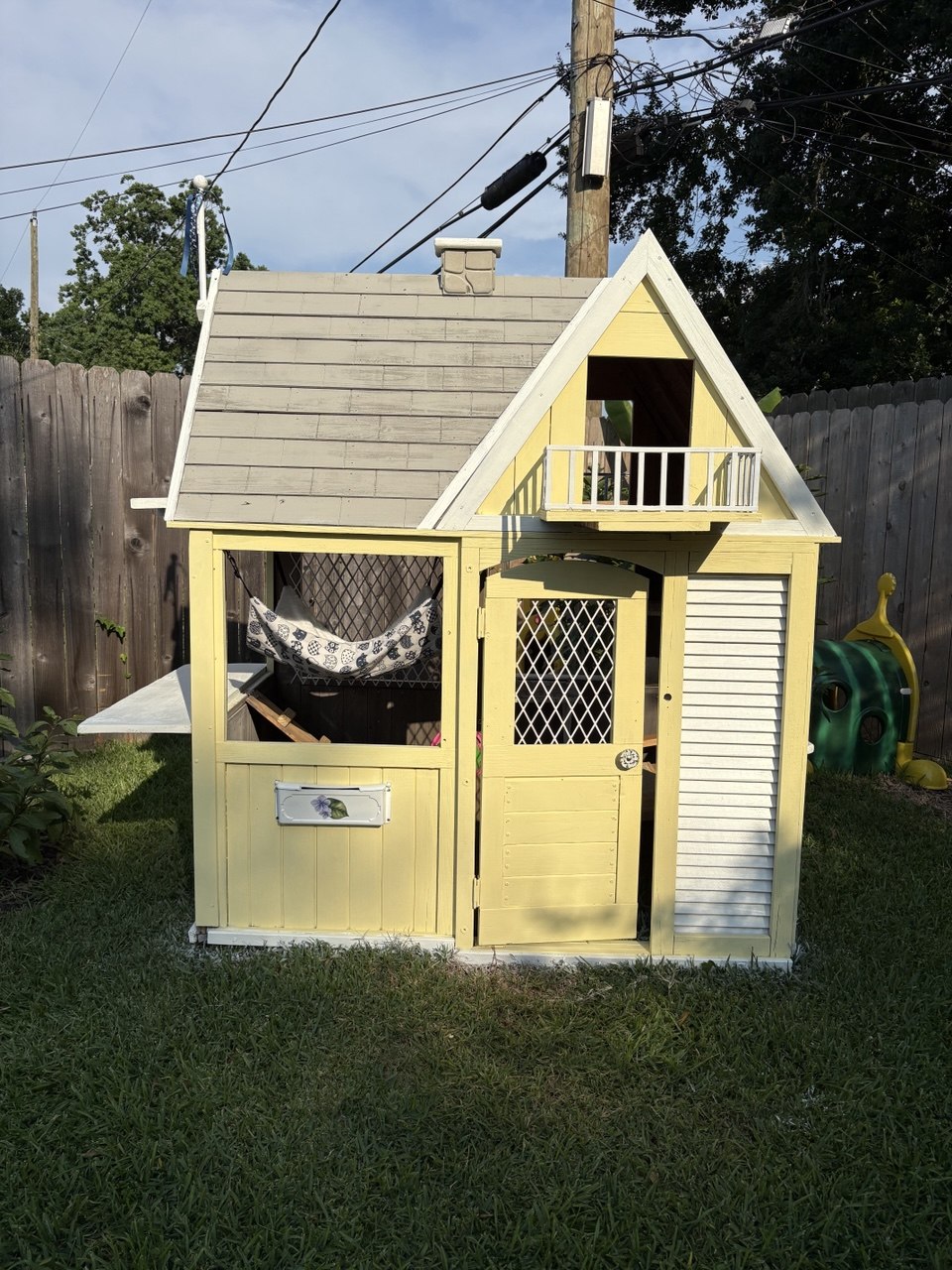
The Cat Cottage
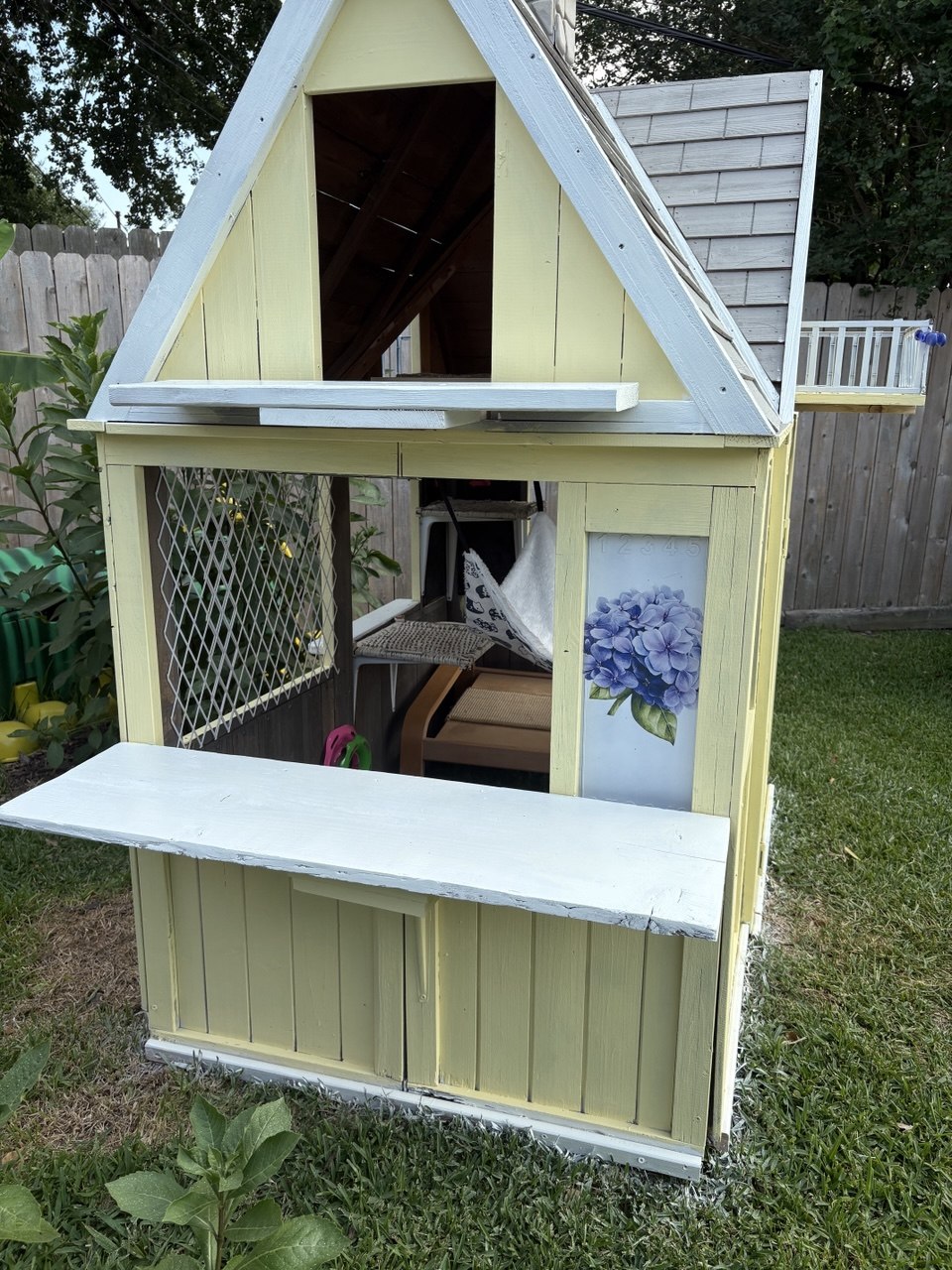
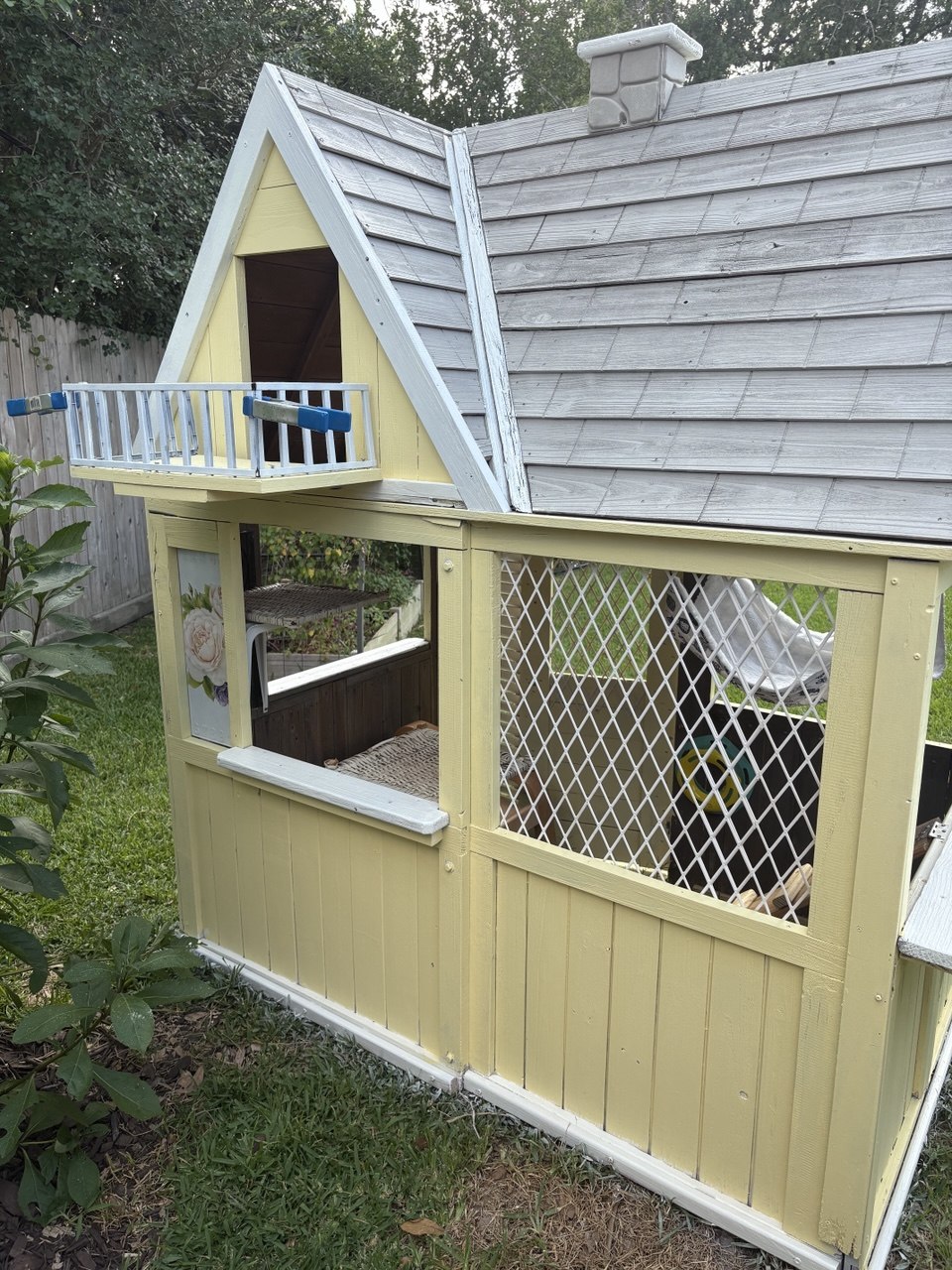
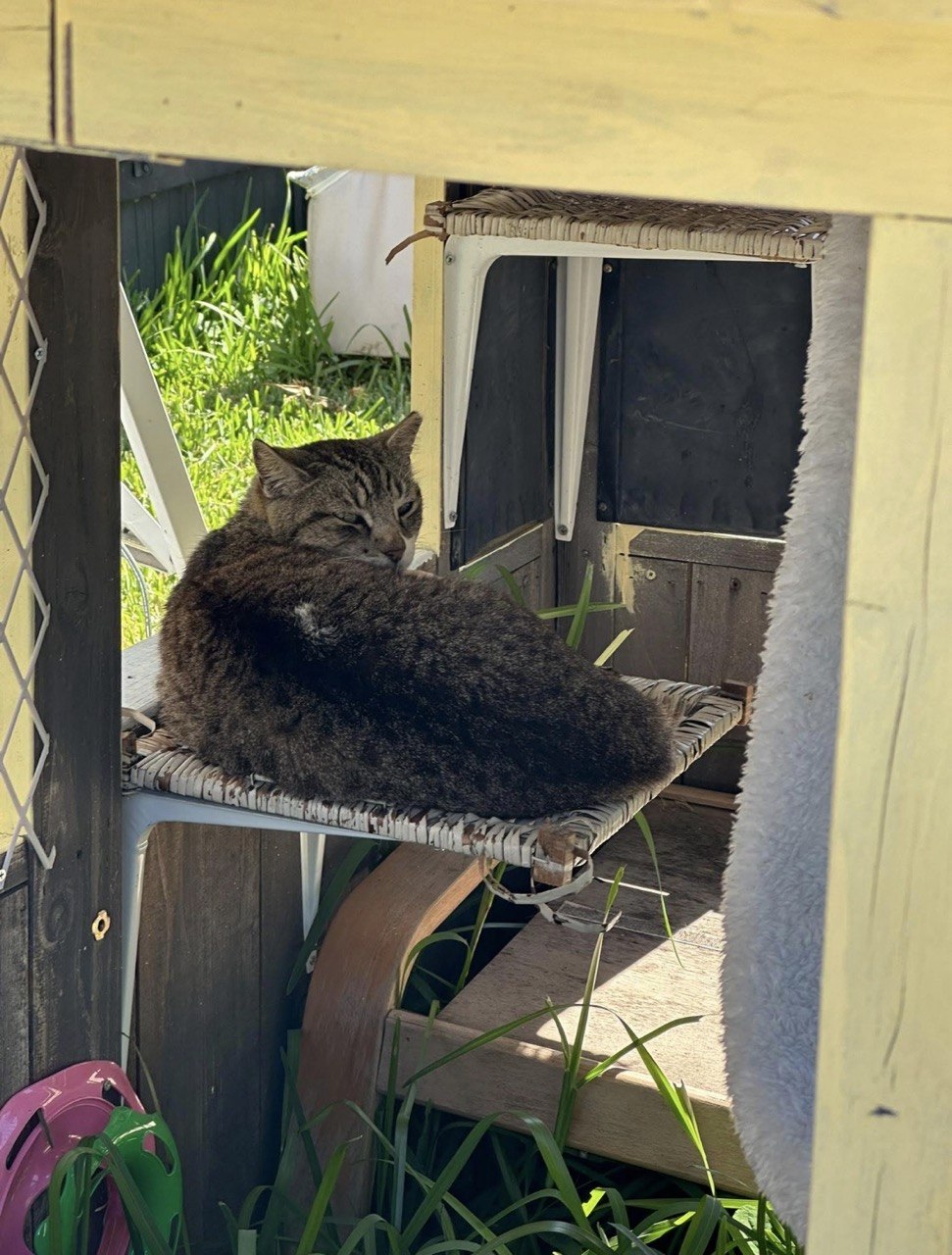
A full two-story cottage, rebuilt by volunteers into a cozy retreat for the colony — complete with a balcony, a hammock, lattice windows, and soft perches inside. On a cold or wet night, having somewhere cozy to retreat to can make a real difference for an outdoor cat. On every other night, it's simply the nicest address on Woodleigh Street.
The Garden Shelter
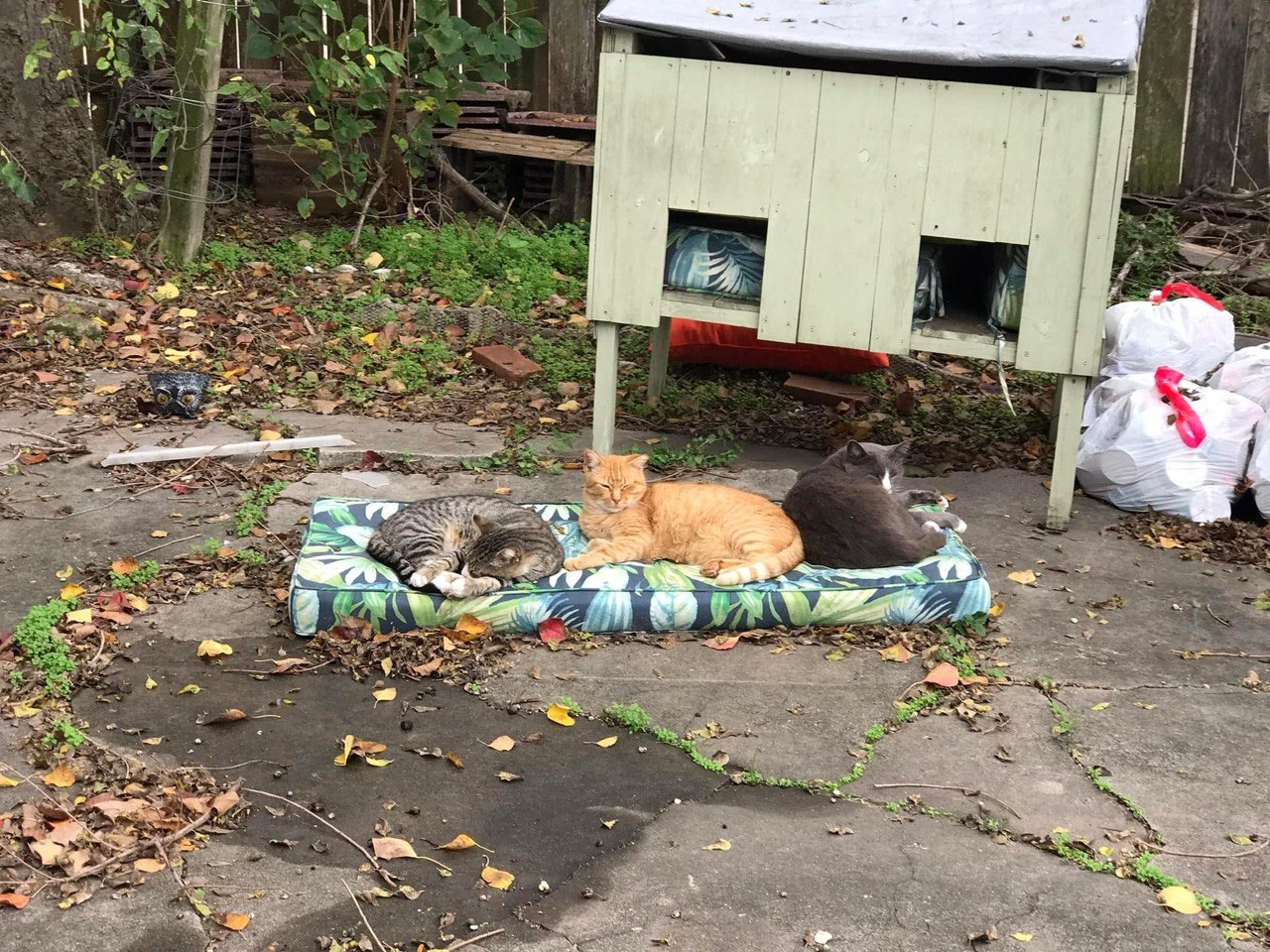
A raised wooden shelter built to give the whole colony cover from Houston's rain, wind, and heat — up off the wet ground, with soft bedding tucked inside each entrance. It's another safe, dry spot cats can duck into when the weather turns, because one option is never really enough when you're caring for a whole colony.
The Bench Hideaways
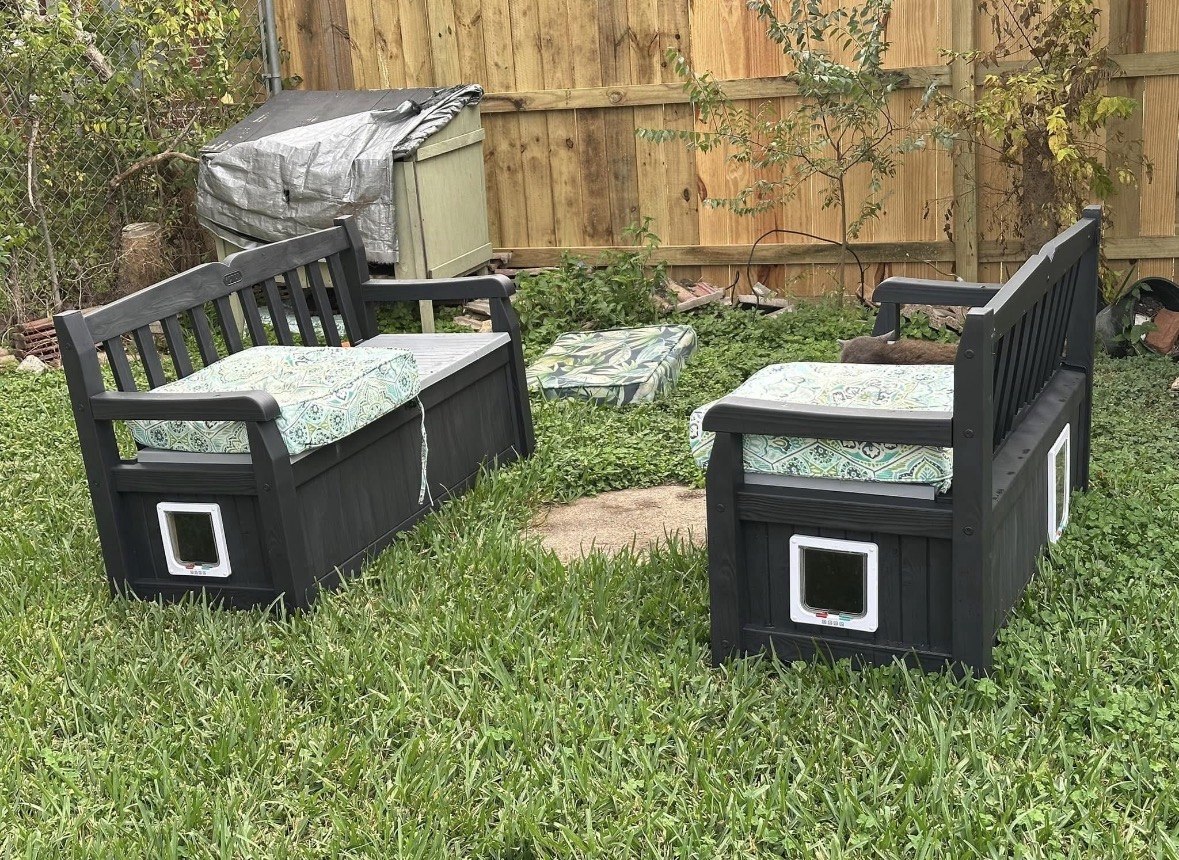
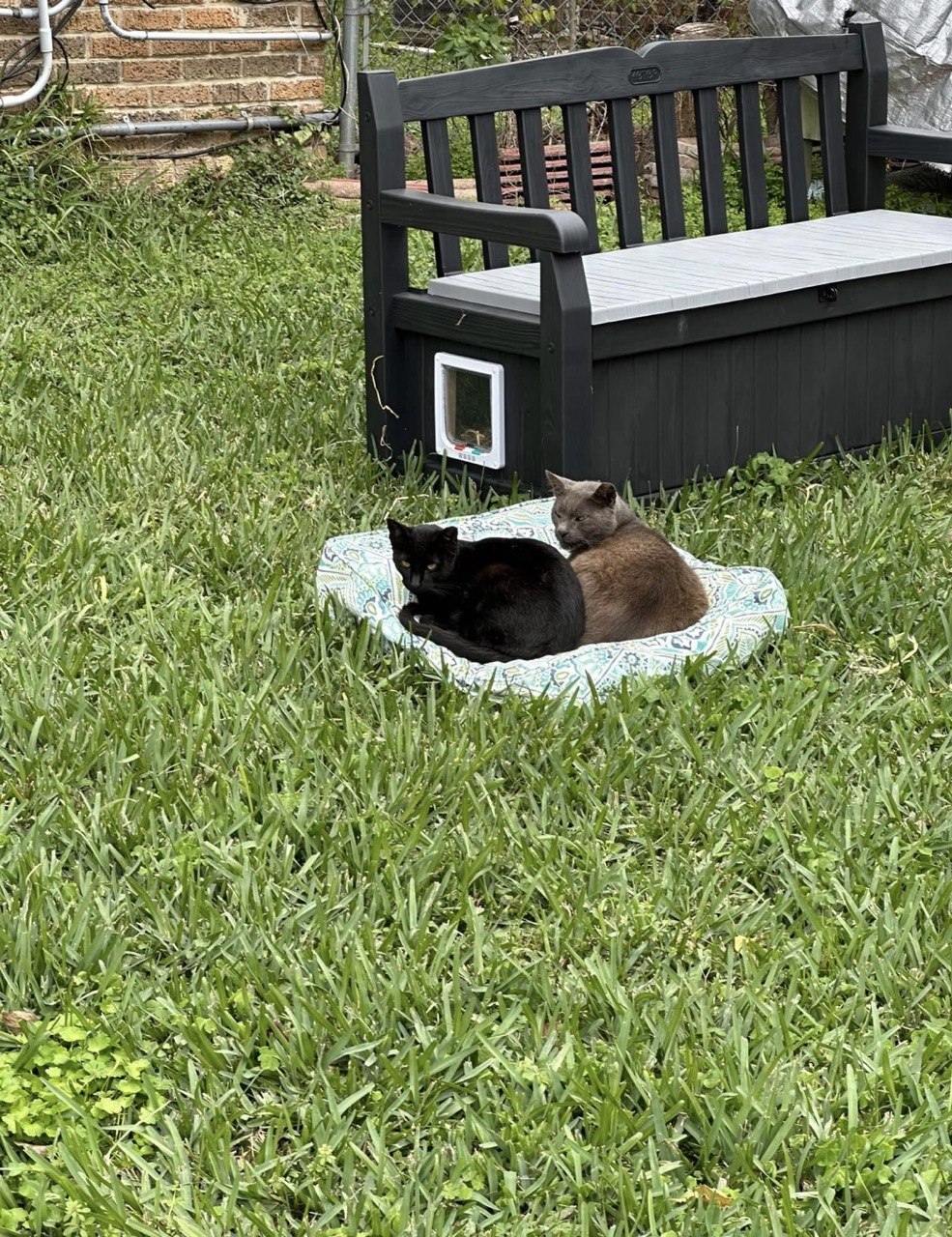
Garden benches with a secret: their bases are enclosed, weatherproof dens, each with its own cat-flap door. Neighbors get a place to sit; cats get a warm, dry hideaway underneath. It's the kind of double-duty thinking that keeps a colony sheltered without turning a shared street into a cat compound.
The Catnip Flowerbeds
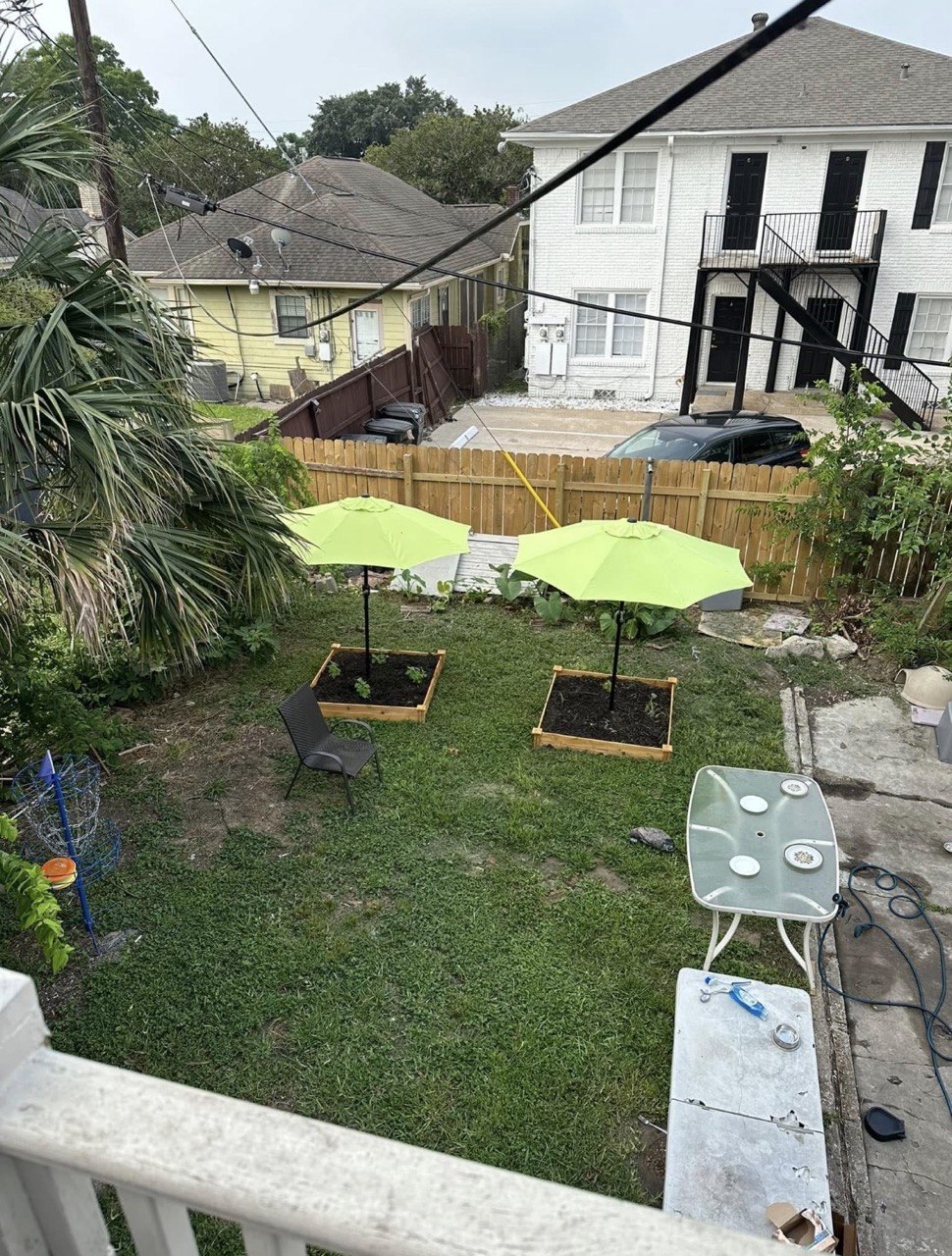
Raised flowerbeds planted right on the property, filled with catnip for the cats to enjoy — with umbrellas overhead to keep the young plants (and their visitors) out of the brutal Texas sun. It's a small addition, but it matters: enrichment means the cats get to explore and play, not just get by.
Storm-Season Shelters
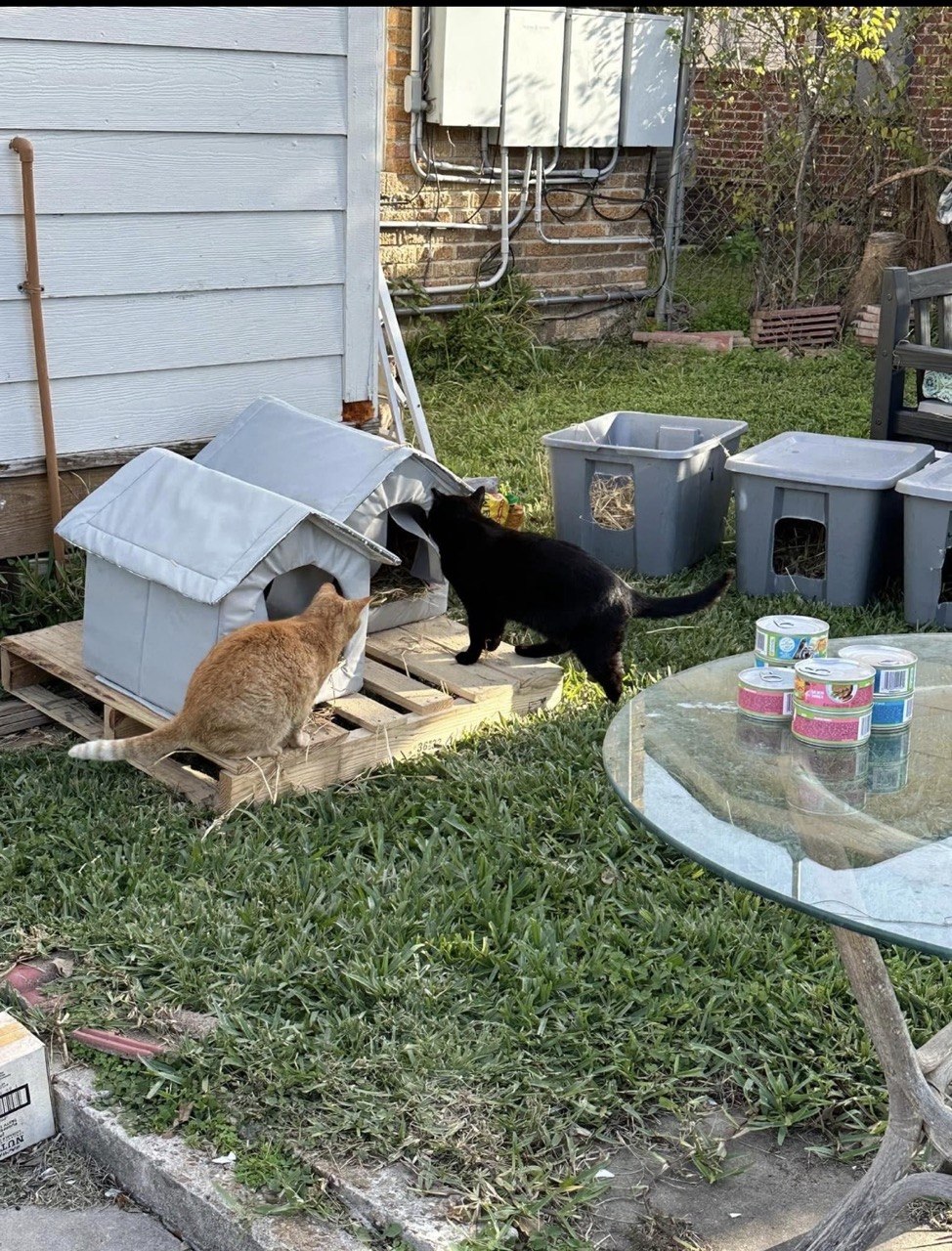
When Gulf Coast weather turns serious, quantity matters as much as quality. Insulated cat houses raised on pallets and straw-lined tote shelters give every cat in the colony a dry place to wait out a storm — no one has to share if they don't want to. (Want to build one yourself? See our winter shelter guide.)
Want to help fund the next project? Every dollar goes to the cats.